
Why Pakistan May Nuke India !!!

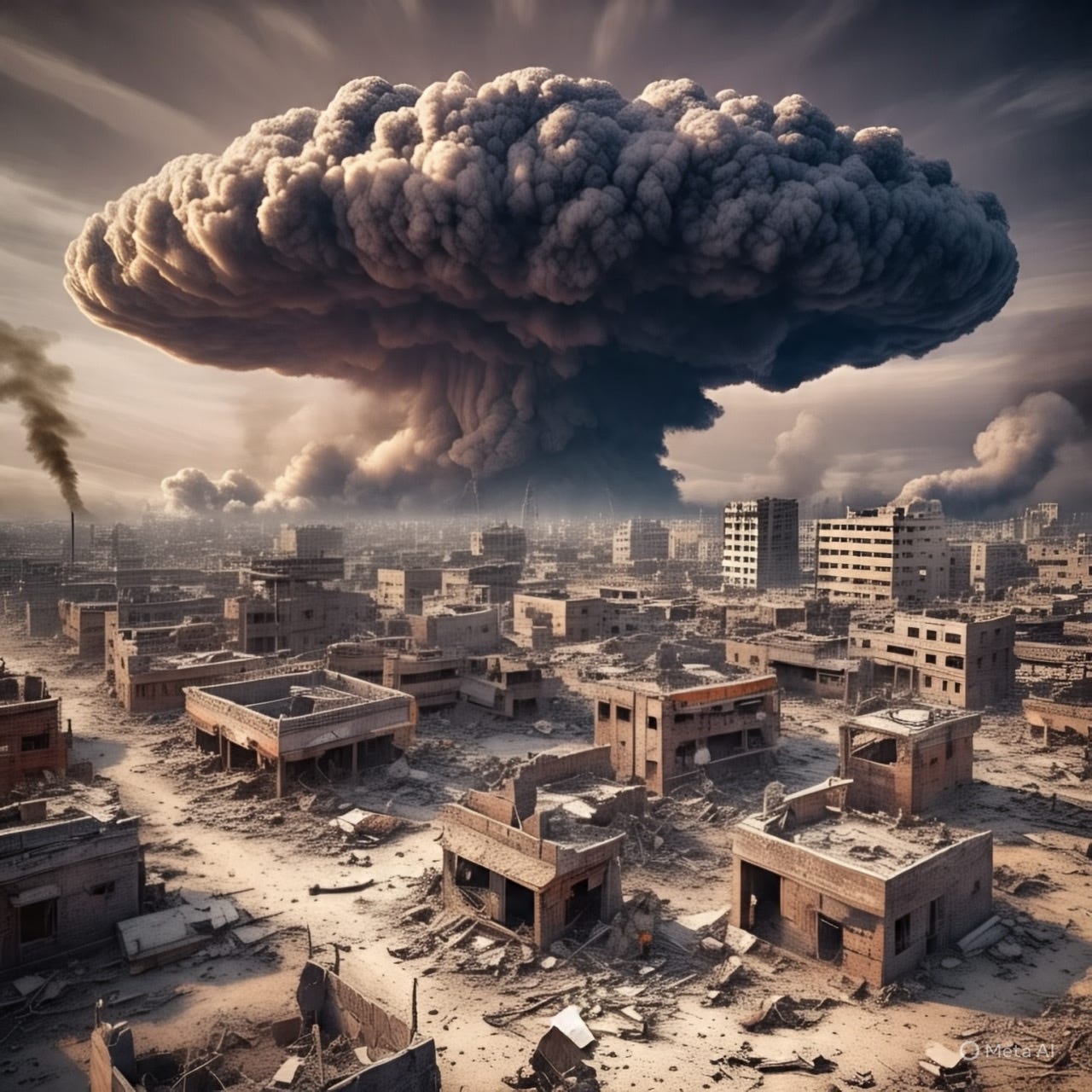
The military crisis between India and Pakistan in early May 2025 has brought South Asia closer to the brink of war than at any point in recent decades. Triggered by a deadly terrorist attack on April 22, 2025, in Pahalgam, Indian-administered Kashmir, which killed 26 people, mostly Hindu tourists, the conflict escalated rapidly. India launched “Operation Sindoor” on May 6-7, striking nine alleged terrorist sites in Pakistan and Pakistan-administered Kashmir, claiming to target infrastructure linked to militant groups Lashkar-e-Taiba and Jaish-e-Mohammed. Pakistan, denying any role in the Pahalgam attack, responded with artillery barrages and claimed to have shot down five Indian aircraft, including three French-made Rafale jets, using Chinese J-10C fighters. This tit-for-tat exchange, marked by missile and drone strikes, resulted in significant casualties—Pakistan reported 31 civilian deaths, while India claimed over 100 militants were killed—and raised fears of nuclear escalation. A U.S.-brokered ceasefire on May 10, facilitated by President Donald Trump and Secretary of State Marco Rubio, temporarily halted hostilities, but the crisis has reshaped the strategic landscape of South Asia, highlighting issues of deterrence, regional power dynamics, and the unresolved Kashmir dispute.
Strategic Outcomes and Pakistan’s Perceived Dividends
The crisis has yielded several strategic outcomes, with Pakistan claiming significant advantages that challenge India’s regional dominance and reshape the narrative around their rivalry.
Perceived Conventional Military Superiority. Pakistan asserts it demonstrated military superiority, particularly in air defense and electronic warfare. Its military claimed to have downed five Indian aircraft and 77 loitering munition drones, showcasing technological prowess and tactical preparedness. Brigadier General (ret.) Asif Haroon Raja, a Pakistani defense analyst, emphasized Pakistan’s edge in electronic warfare and cyber capabilities during the crisis. This perception has dented India’s confidence in its military modernization, backed by billions in investments, including the acquisition of Rafale jets and S400 AD systems. The downing of Indian aircraft, represents a significant embarrassment for Prime Minister Narendra Modi, reducing political appetite in New Delhi for further direct military confrontations with Pakistan.
Exacerbation of India’s Internal Fault Lines. The crisis has deepened India’s Hindu-Muslim divide, undermining its democratic credentials. Social media platforms have been flooded with videos showing violence against Muslims in India, fueled by Hindutva-inspired rhetoric. These incidents reinforce Pakistan’s narrative of the “Two Nation Theory,” which justifies its existence as a homeland for South Asia’s Muslims. The unrest highlights India’s challenges in managing its diverse population, particularly in the context of Modi’s policies in Kashmir, such as the 2019 revocation of Jammu and Kashmir’s autonomy, which has fueled resentment among the region’s Muslim majority. This internal discord weakens India’s cohesion and global image as a secular democracy.
Undermining India’s Regional Ambitions. India’s aspirations to be the net security provider in South Asia and a counterweight to China have been severely undermined. The crisis exposed vulnerabilities in India’s military capabilities and its inability to decisively counter Pakistan’s response. Furthermore, India’s aggressive rhetoric and actions, such as threatening to revoke the Indus Waters Treaty, alienated potential allies. The treaty, a cornerstone of India-Pakistan relations since 1960, has survived previous conflicts, but Pakistan labeled India’s threats as “water terrorism,” framing New Delhi as a reckless actor. This has weakened India’s bid to project itself as a responsible global power, especially as it competes with China for regional influence.
Revival of the Kashmir Issue. The crisis has thrust the Kashmir dispute back onto the global stage, a core national interest for Pakistan. President Trump’s offer to mediate, despite India’s insistence that Kashmir is a bilateral issue, has internationalized the conflict. Pakistan has long advocated for a UN-sponsored plebiscite to determine Kashmir’s fate, a demand supported by the region’s Muslim majority. The U.S.-brokered ceasefire and Trump’s subsequent call for talks at a neutral site have given Pakistan diplomatic leverage, forcing India to confront an issue it has sought to sideline.
Validation of Sub-Conventional Warfare. The crisis has bolstered Pakistan’s belief in sub-conventional warfare—such as supporting insurgent groups—as a tool to pressure India. While Pakistan denies involvement in the Pahalgam attack, the escalation prompted India to engage in talks, validating Pakistan’s strategy of using asymmetric means to force negotiations on unresolved issues like Kashmir. This approach, however, risks further destabilization, as it may encourage Pakistan to pursue similar tactics in the future, despite the lack of conclusive evidence linking it to the April attack.
Weakening India’s Ultra-Nationalist Government. The crisis has eroded the political capital of Modi’s Bharatiya Janata Party (BJP), which thrives on nationalist rhetoric. The loss of aircraft and the failure to achieve decisive military success have embarrassed Modi, who has projected an image of strength. Domestic criticism, coupled with international scrutiny of India’s actions, has weakened the BJP’s narrative of invincibility, forcing it to navigate a delicate balance between escalation and restraint.
India’s Diplomatic Isolation. Despite India’s global outreach, the crisis highlighted its diplomatic isolation. While India garnered sympathy for the Pahalgam attack, its missile strikes drew criticism for targeting civilian areas, with Pakistan reporting 31 civilian deaths, including women and children. Major powers like US, UK, China and Russia, both with stakes in South Asia, did not explicitly support India, while Pakistan’s alignment with China provided it a strategic edge. India’s failure to secure robust international backing contrasts with its narrative of Pakistan’s diplomatic isolation, marking a significant setback for New Delhi’s foreign policy.
Risks of Escalation and Sub-Conventional Warfare
The crisis has emboldened Pakistan to consider sub-conventional warfare as a viable strategy to pressure India, particularly on Kashmir. While no definitive evidence links Pakistan to the Pahalgam attack, the outcome—India’s engagement in talks under U.S. pressure—may encourage Pakistan to support similar attacks to force negotiations. This approach, however, risks catastrophic escalation. India’s refusal to engage in peace talks, coupled with Modi’s assertion that “India will not tolerate nuclear blackmail,” suggests New Delhi may respond more aggressively to future provocations, potentially targeting Pakistani military or civilian infrastructure.
The Nuclear Dimension: A Dangerous Calculus
Pakistan’s arsenal of approximately 170 nuclear warheads, including tactical nuclear weapons like the Nasr missile, introduces a perilous dimension to the conflict. Pakistani strategists may perceive a tactical nuclear strike on Indian ground forces within Pakistani territory—such as in the desert sector—as a viable option to deter India’s conventional superiority. This scenario, as posited by some analysts, could exploit India’s reluctance to retaliate with nuclear weapons due to the risk of massive civilian casualties in densely populated areas. Indian political leaders may not be inclined to respond with nuclear weapons if Pakistan engages its land forces, within its borders in desert sectors. This can powerfully force India to resolve all outstanding issues including the issue of Jammu and Kashmir. It is a gamble which Pakistan might be willing to take as it yields significant dividends. It may resolve all outstanding issues with India and bring a permanent peace to the region.
The Path Forward: Musharraf’s Four-Point Formula
Indian needs to come to turns that it is time to resolve issues with Pakistan. The cost benefit analysis make a nuclear war attractive to Pakistan. To avert further escalation, a diplomatic resolution to the Kashmir dispute is critical. Former Pakistani President Pervez Musharraf’s four-point formula, proposed during the 2001 Agra Summit, offers a potential framework:
Demilitarization: Gradual withdrawal of troops from both sides of the Line of Control (LoC) to reduce tensions.
Self-Governance: Granting greater autonomy to Kashmiris in both India- and Pakistan-administered regions.
Joint Management: Establishing a mechanism for India and Pakistan to jointly oversee Kashmir’s administration.
Open Borders: Allowing free movement and trade across the LoC to foster economic integration and people-to-people contact.
This formula, nearly finalized in 2001 but derailed by disagreements over cross-border terrorism, remains a viable starting point. It addresses Pakistan’s demand for Kashmiri self-determination while allowing India to maintain its territorial claims. However, India’s current leadership, driven by nationalist fervor, shows little inclination for dialogue, complicating prospects for peace.
Conclusion: A Call for Prudence
The May 2025 crisis has exposed the fragility of India-Pakistan relations and the catastrophic potential of escalation in a nuclear-armed region. Pakistan’s perceived strategic gains—military superiority, diplomatic leverage, and the revival of the Kashmir issue—come with the risk of encouraging sub-conventional warfare, which could spiral into a broader conflict. India, facing military and diplomatic setbacks, must exercise restraint to avoid a cycle of retaliation. The international community, particularly the U.S., must sustain diplomatic pressure to bring both nations to the negotiating table. Musharraf’s four-point formula offers a path to de-escalation, but it requires political courage and visionary leadership—qualities currently in short supply in New Delhi. Without a resolution to the Kashmir dispute, South Asia remains a tinderbox, where miscalculation could lead to unthinkable consequences.
References CNN Politics, “Why Trump isn’t leading an emergency effort to ease the India-Pakistan crisis,” May 9, 2025. TRT Global, “Kashmir back in focus after Trump averts major India-Pakistan war,” May 13, 2025. The New York Times, “Pakistan’s Defense Minister Welcomes U.S. Help to Ease Tensions With India,” May 8, 2025. Newsweek, “Trump Faces New Nuclear Crisis as India-Pakistan Tensions Soar,” April 25, 2025. The Indian Express, “Musharraf at Agra Summit: What was his ‘four-point formula’ on Kashmir issue?” February 7, 2023. Fox News, “Trump offers to help India, Pakistan amid growing conflict: ‘I want to see them stop’,” May 8, 2025. CNN, “India and Pakistan are both claiming victory after this week’s clashes. Will cooler heads prevail?” May 10, 2025. BusinessToday, “Military action entirely conventional: MEA junks Trump’s claims of averting nuclear conflict with Pakistan,” May 13, 2025. News18, “Nuclear Threat From Pakistan Strategic Tool, Displays Conventional Weakness: Intelligence Sources,” May 11, 2025. The Media Line, “Analysis: Trump-brokered India-Pakistan Ceasefire Welcomed; Experts Warn Kashmir Needs Long-term Solution,” May 12, 2025. Newsweek, “India-Pakistan Update: Trump Offers to Help After Missile Strikes,” May 9, 2025.
Happy new year 🎊 🎊